
In this article
Kumbh Mela gathers people around a sacred river and a shared hope of renewal. Pilgrims come to bathe, pray, listen and spend time with religious communities. Its scale can be extraordinary, yet the meaning of the journey often rests in simple acts: arriving with a vow, offering a prayer or keeping a daily devotional routine.
The sacred pitcher story
Kumbha means pitcher. A familiar devotional account connects the pilgrimage to amrita, the nectar of immortality, and to the struggle between devas and asuras following the churning of the ocean. Drops of nectar are associated with Prayagraj, Haridwar, Nashik and Ujjain.
Prayagraj district’s heritage guide recounts this sacred geography as legend. It is a way of explaining the places’ religious meaning. A devotional origin account should not be used by itself to assign a precise historical founding date to the present festival.
Four locations and their rivers
Prayagraj’s gathering centres on the Sangam, where the Ganga and Yamuna meet and Saraswati is present in sacred tradition. Haridwar is associated with the Ganga, Nashik with the Godavari and Ujjain with the Shipra. The pilgrimage is therefore connected with several distinct local religious landscapes.
Major gatherings follow traditional calendar calculations. The approximately twelve-year cycle at a location is a useful introduction, but the event name, bathing dates and local arrangements should be checked with its organizers. Terms such as Kumbh, Ardh Kumbh and Maha Kumbh appear in different contexts; the name alone is not enough to establish a universal 144-year rule.
What pilgrims seek
Snan, sacred bathing, expresses a prayer for purification and liberation in Hindu tradition. The mela also creates opportunities for worship and religious teaching. Visitors should allow the pilgrims’ own commitments to explain these practices rather than treating every camp as an attraction.
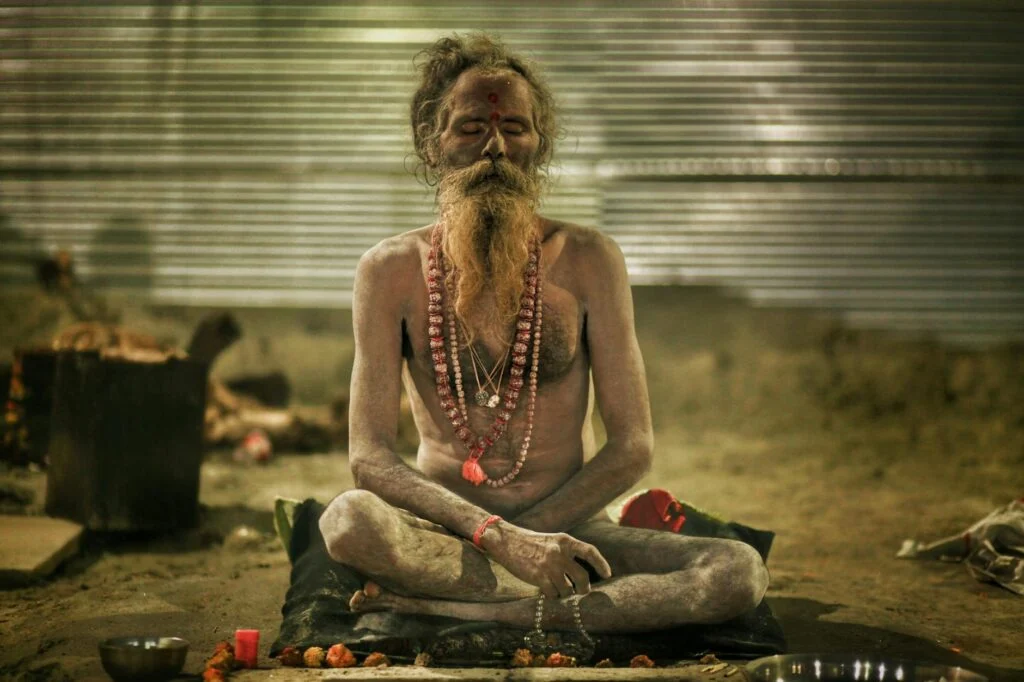
Religious communities and ascetics are a distinctive part of the gathering. Their public processions may have specific routes and access arrangements. Observing from a permitted place can be a meaningful way to witness the occasion, with no need to press toward the river or join activities without invitation.
Before choosing a visit
Decide which city, which event and which part of its programme you mean to attend. Read the relevant authority’s current notices and confirm accommodation directly. Ask about distance from transport points, permitted pedestrian routes, sanitation, meals and help for anyone with limited mobility. A map and a booking name may not explain the practical journey during a major bathing day.
Agree on a meeting point with companions and keep essential contact details on paper. Carry medicines and use reliable drinking water. Follow designated bathing areas, barriers and police directions; the religious value of a bath does not mean water is safe to drink or that entering it is suitable for every visitor.
Leaving space for devotion
Ask before photographing people, entering a camp or approaching a ceremony. A quieter day may offer more opportunity to listen, learn and understand the setting than the largest procession day. Give yourself permission to rest or leave a crowded area when needed.
Kumbh Mela is sustained by many devotional lives. A considerate visitor makes room for that diversity, approaching the river and its communities with patience and respect.